Dimensioning Solutions

Explore how Packizon’s advanced dimensioning solutions help logistics companies automate measurements, reduce errors, and optimize warehouse operations.

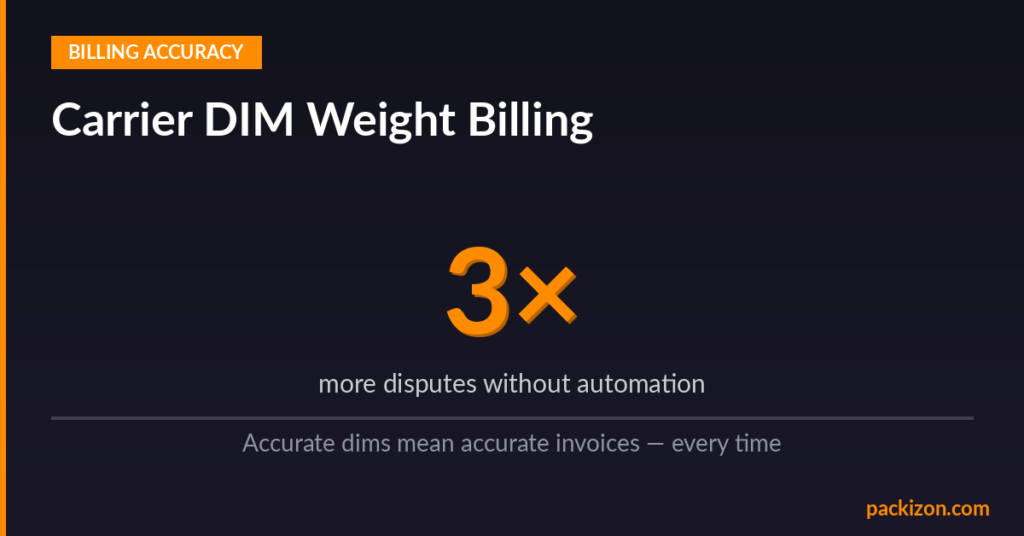
FedEx carrier DIM weight billing adjustment on shipping invoice

How to Eliminate Carrier DIM Weight Billing Disputes (2026 Guide)

Dimensioning Solutions4 min read How to Eliminate Carrier DIM Weight Billing Disputes (2026 Guide) By Packizon TeamPublished May 17, 2026 To eliminate carrier DIM weight billing disputes — here’s how to eliminate carrier DIM weight billing disputes permanently: warehouses need NTEP-certified automated dimensioning that captures legally defensible measurements before a package ships. Systems like the […]

How to Eliminate Carrier DIM Weight Billing Disputes (2026 Guide) Read More »
CubiScan vs vMeasure vs Rice Lake vs Packizon parcel dimensioning comparison

CubiScan vs vMeasure vs Rice Lake vs Packizon: Parcel Dimensioning Solutions Compared (2026)

Dimensioning Solutions6 min read CubiScan vs vMeasure vs Rice Lake vs Packizon: Parcel Dimensioning Solutions Compared (2026) By Packizon TeamPublished May 5, 2026 Quick Answer: CubiScan and Rice Lake are established laser-based parcel dimensioning solutions requiring professional installation and multi-week procurement timelines. vMeasure is a camera-based alternative with a smaller hardware footprint. Packizon Dim L1

CubiScan vs vMeasure vs Rice Lake vs Packizon: Parcel Dimensioning Solutions Compared (2026) Read More »

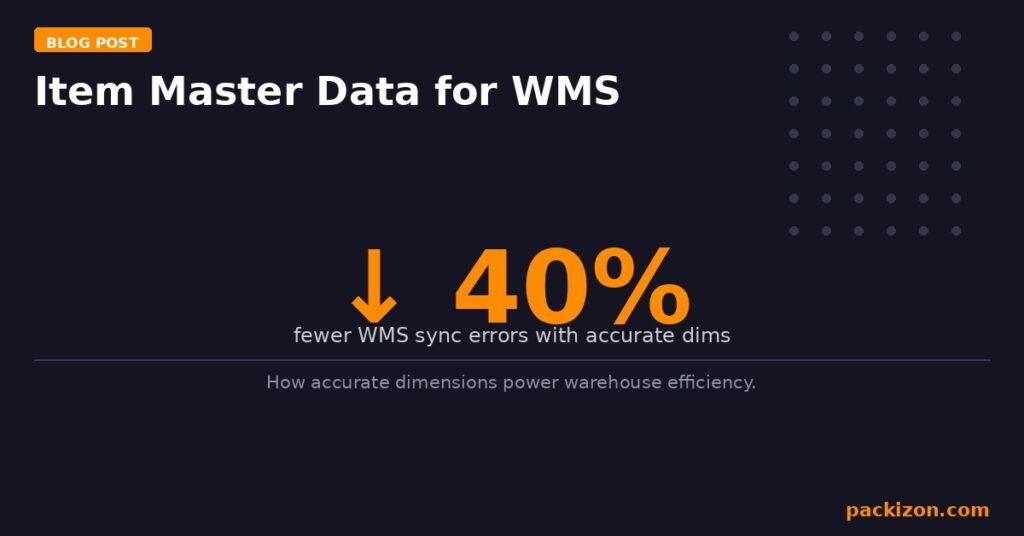
Item Master Data for WMS: How Accurate Dimensions Power Warehouse Efficiency

Dimensioning Solutions7 min read Item Master Data for WMS: How Accurate Dimensions Power Warehouse Efficiency By Packizon TeamPublished May 2, 2026 Quick Answer: Item master data for WMS should include accurate length, width, height, and weight for every SKU. Accurate dimensions enable correct slotting, cartonization, and carrier billing. Warehouses that populate item master dimensions using

Item Master Data for WMS: How Accurate Dimensions Power Warehouse Efficiency Read More »

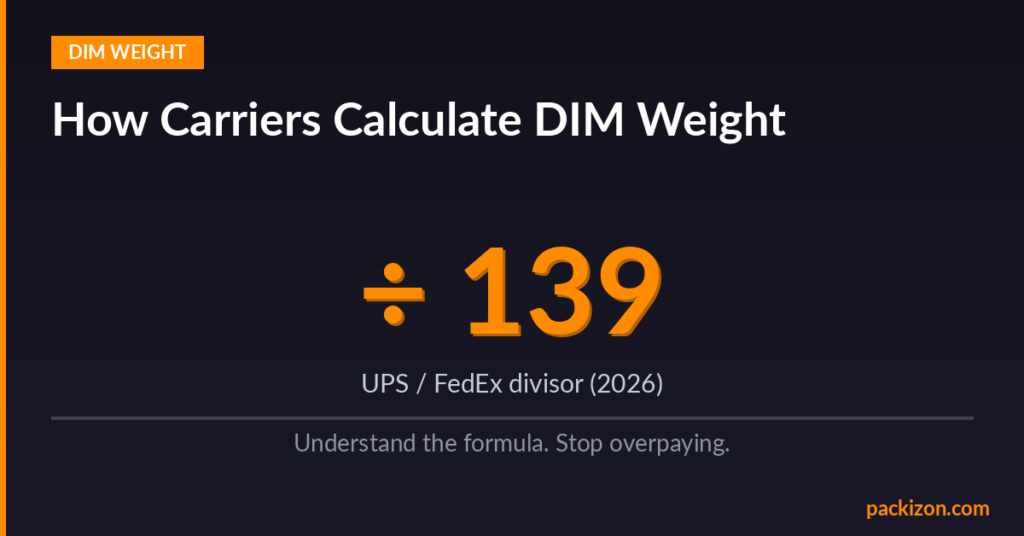
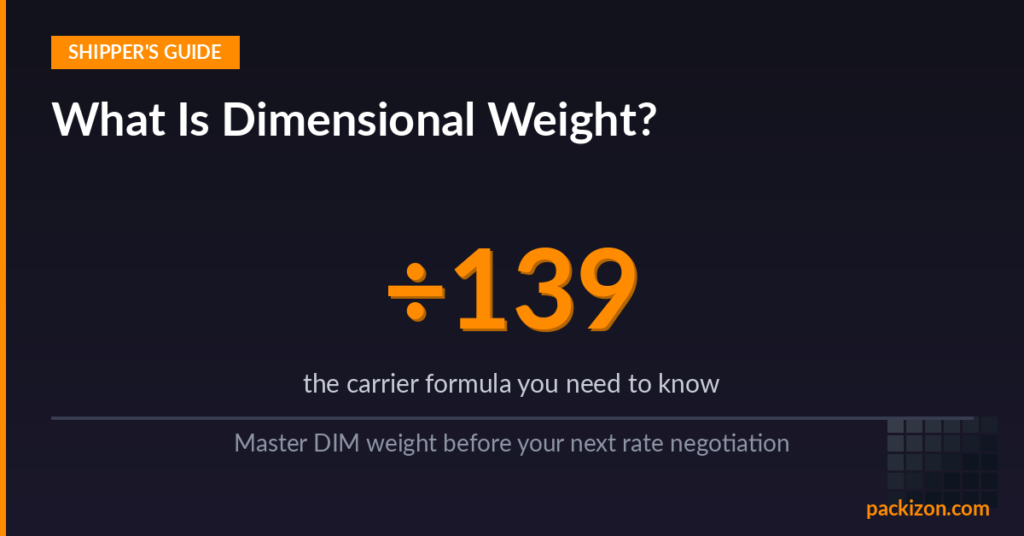
How carriers calculate dimensional weight using DIM factor formula

Carrier DIM Weight Divisors: FedEx, UPS, and USPS Explained

Dimensioning Solutions8 min read Carrier DIM Weight Divisors: FedEx, UPS, and USPS Explained By Packizon TeamPublished May 2, 2026 Quick Answer: FedEx and UPS both use a DIM divisor of 139 for domestic US shipments. USPS uses 166 for Priority Mail packages over 1 cubic foot. For international shipments, UPS uses 139 and FedEx varies

Carrier DIM Weight Divisors: FedEx, UPS, and USPS Explained Read More »

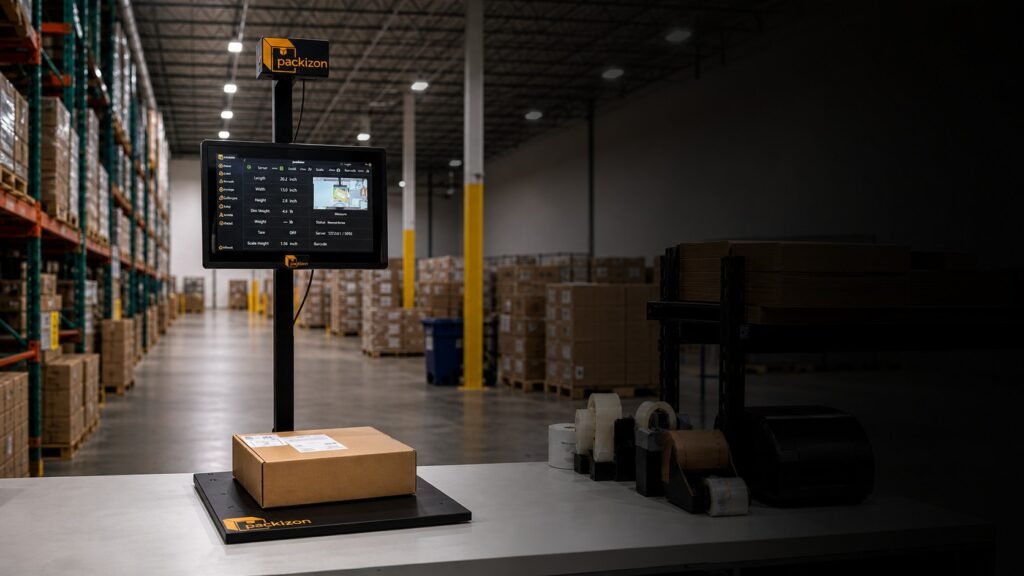
Automated dimensioning system replacing manual package measurement in warehouse

NTEP Certification for Dimensioning Systems: What It Is and Why It Matters

Dimensioning Solutions7 min read NTEP Certification for Dimensioning Systems: What It Is and Why It Matters By Packizon TeamPublished May 2, 2026 Quick Answer: NTEP certification (National Type Evaluation Program) confirms a dimensioning system meets legal-for-trade accuracy standards. NTEP-certified devices are tested by the National Conference on Weights and Measures to ±0.2-inch accuracy. Carrier DIM

NTEP Certification for Dimensioning Systems: What It Is and Why It Matters Read More »

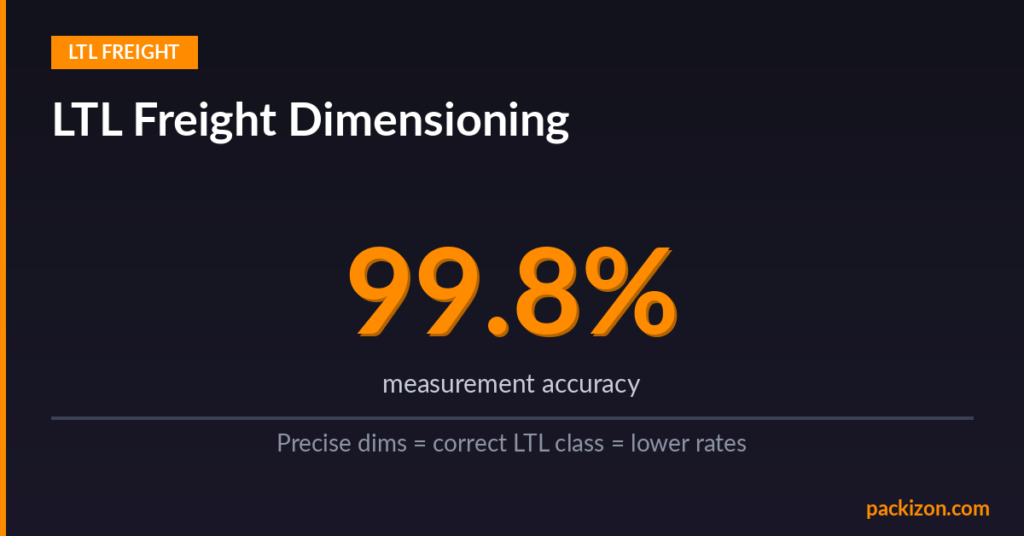
LTL freight dimensioning for accurate freight class assignment and carrier billing

LTL Freight Dimensioning: Stop Reweigh Charges and Freight Class Errors

Dimensioning Solutions9 min read LTL Freight Dimensioning: Stop Reweigh Charges and Freight Class Errors By Packizon TeamPublished May 2, 2026 LTL freight dimensioning is the most reliable method for stopping carrier reweigh charges and freight class errors before they impact your shipping costs. Quick Answer: To stop LTL freight reweigh charges, measure every shipment with

LTL Freight Dimensioning: Stop Reweigh Charges and Freight Class Errors Read More »

NMFC code guide for freight classification and LTL carrier billing accuracy

Dimensional Weight vs Actual Weight: What’s the Difference?

Dimensioning Solutions8 min read Dimensional Weight vs Actual Weight: What’s the Difference? By Packizon TeamPublished May 2, 2026 Quick Answer: Dimensional weight (DIM weight) is a calculated shipping weight based on package volume, used when it exceeds actual weight. Actual weight is what the scale reads. Carriers (UPS, FedEx, USPS) bill whichever is higher. A

Dimensional Weight vs Actual Weight: What’s the Difference? Read More »

📋
Free: 2026 Warehouse Dimensioning Buyer's Checklist 47 criteria to evaluate any system before you sign — used by operations managers & logistics engineers
Download Free PDF →